Thursday, October 12, 2006

Fifth Episode: HODGMAN, COULTON, REES

It's a very special episode of the F.W. Thomas Performances at a special night and time. On Tuesday October 24 at 7PM, we will be joined by:
  • John Hodgman, resident expert on Comedy Central's "Daily Show," and author of the hilarious compendium of critical information, "The Areas of My Expertise"

  • Singer-songwriter Jonathan Coulton, contributing troubador to Scientific American magazine and creator of the miraculous "Thing A Week" podcast. Despite his genius, his work is still available for free.

  • David Rees, the artist responsible for the criminally subversive comic strip, "Get Your War On"
As ever, the event will take place at the Warehouse Theater, 1017-1021 7th Street NW between
New York Ave. and L St. Phone is 202-783-3933.

Admission for this event is $15. Attendees will receive a paperback copy of "The Areas of My Expertise," courtesy of Olsson's Books & Records.

Wednesday, August 30, 2006

Fourth Inaugural: We are back, with actual rock star Jonathan Coulton

We last left our hero, the hypersensitive F.W. Thomas (only slightly renowned as a novelist, attorney, bureaucrat, bon vivant, D.C. fixer, and devoted friend) in the clutches of a certain Washington Post reporter, whose tart-tongued ministrations forced Mr. Thomas into months of seclusion from which he has only just emerged.

His raging self-doubt and inner turmoil notwithstanding, Mr. Thomas drops to his two knees and pleads with you to attend this, the Fourth Inaugural Edition of the F.W. Thomas Performances.

We are convening Monday, September 18 at 7:30PM in the big room at the Warehouse Theater. For the demonstrably ludicrous admission of $3, you will enjoy the best efforts of:

Jonathan Coulton. The singer/songwriter whose cover of "Baby Got Back" is a bona fide sensation on The Internets. Click here if you have no faith.

Reihan Salam, a writer living in Washington, D.C., explaining the hilariously lamentable phenomenon of the "Beta Male."

Elspeth Reeve, a reporter at the New Republic, on her forbidden love for Ann Coulter.

T.M. Lowery, F.W. Thomas artist-in-residence, presenting his cartoon journalings.

And F.W. Thomas Impresario and Master of Ceremonies Adam Mazmanian will explain what it is like to watch one's father slowly but inexorably transform into a doppelganger
of Kim Jong-Il.

The Warehouse Theater is located at 1017-1021 7th Street NW. It is a short and not altogether unpleasant walk from the Chinatown/Gallery Place Metro. Phone is 202-783-3933.

Mr. Thomas has missed you lo these many months, and bids you to rejoin him. Please do not disappoint him, as he is very, very fragile.

Friday, June 16, 2006

Next month, the backlash

Our humble literary efforts have reaped a whirlwind of publicity. The Washington Post visited our reading on Monday, and produced this article. The photograph must be viewed at full size to be truly appreciated.

Many thanks to SexCop (aka Josh McIlvain), Mike Lowery, Matt Summers-Sparks and Andrew Beaujon for joining us on June 12.

We will reconvene Sept. 18, at which time you will see the great Jonathan Coulton, the man who turned "Baby Got Back" into a love song.

Saturday, June 03, 2006

Third Inaugural

Thank you for your kind attention.

Mr. F.W. Thomas is hosting one more thrilling evening of readings, artistic display and song before he leaves for his summer vacations in parts unknown. The pleasure of your company is kindly requested. This is the last edition of the F.W. Thomas Performances until Sept. 18, so please come and soak in elevating proceedings as if it were your last night on earth, because in many ways, it will be.

This event will again occur at the Warehouse Theater on Monday June 12 at 7:30PM. Admission is $3. The Warehouse Theater is located at 1017-1021 7th Street NW. It is a short and not altogether unpleasant walk from the Chinatown/Gallery Place Metro. Phone is 202 783 3933.

The June 12 event will feature:

  • Andrew Beaujon, managing editor of the Washington City Paper and a former senior contributing writer for Spin will read from his new book, "Body Piercing Saved My Life."

  • Josh McIlvain, a singer, author and songwriter living in New York City, where he performs his own compositions under the mysterious and alluring name of Sex Cop, will be singing songs. He maintains a MySpace presence here.

  • T.M. Lowery, cartoonist, artist and creator of the Skeleton Kids will present more hilarious items from his illustrated personal journal and offer advice to the lost and lovelorn. See his work here.

  • Matthew Summers-Sparks, humorist and short story writer whose work has been published in The New York Times, Mississippi Review, McSweeney’s, reading stories.

The F.W. Thomas Performances will be hosted and introduced by yours truly, Adam Mazmanian, a writer living in D.C., a contributor to the Washington City Paper, and who was voted by his high-school graduating class as "Most Likely To Serve As Spectral Conduit for the Ghost of a Minor Nineteenth-Century Writer."

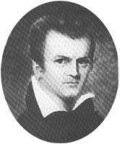
The series is named for F.W. Thomas (1811-1866), the attorney, novelist, satirist, polemicist, poet, journalist, government employee and a dear personal friend of Edgar Allan Poe.

Thanks as always to Miss Katie Lederer, official acting amanuensis and subaltern to the estate of F.W. Thomas. And thanks also to Olsson's Books & Records, who will be acting as our Bookseller of Record in our never-ending quest to move units.

Wednesday, April 26, 2006

Second Inaugural

Thank you for your attention. It is time for the Second Inaugural Edition of the F.W. Thomas Performances, being a monthly literary variety show featuring live presentations from area writers, artists and musicians.

The event is being held in the Main Stage at the Warehouse Theater on Monday May 15 at 7:30PM. Admission is $3. The Warehouse Theater is located at 1017-1021 7th Street NW. It is a short walk from the Chinatown/Gallery Place Metro. Phone is 202 783 3933.

The May event will feature:
  • Louis Bayard, author of the forthcoming novel, "The Pale Blue Eye," and a contributor of reviews and essays to New York Times, the Washington Post and the Washington City Paper, reading from his new book.

  • A. Clarke Bedford, artist and art conservator at the Hirshhorn Museum, presenting excerpts from "William Tecumseh Sherman & The Venus of Willendorf: The Suburban Years."

  • Frederic Frommer, reporter for the Associated Press and author of "The Washington Nationals: 1859 to Today," discussing the history of Negro League baseball in the nation's capital.

  • T.M. Lowery, F.W. Thomas artist-in-residence and creator of the Skeleton Kids, presenting new work.

  • James S. Rosen, Fox News Correspondent and author of the forthcoming "The Strong Man: John Mitchell, Nixon and Watergate" will reveal for the first time ever, the Secret Archives of the Planet of the Apes.
The F.W. Thomas Performances will be hosted and introduced by yours truly, Adam Mazmanian, a writer living in D.C. and a contributor to the Washington City Paper.

The series is named for F.W. Thomas (1811-1866), the attorney, novelist, satirist, polemicist, poet, journalist, government employee and a close friend of Edgar Allan Poe who thought it would be a fine idea to use his influence with President Tyler to obtain a government job for Poe.

In so many ways, the career of F. W. Thomas captures the enterprising, creative spirit that abides in the District of Columbia to this day. It is unjust that his legacy pass unremembered into the mists of bureaucratic history. There is some mostly-factual information on the career of the esteemed Mr. Thomas available here.

For more information on the F.W. Thomas Performances and/or the individual performers, please contact:
Adam Mazmanian at mazmanian@mindspring.com

Thursday, April 13, 2006

A look at FWT

Thanks to the MudSugarians for posting pics of the April 10 event. Check out their Flickr page with six pictures from the event.

Mudsugar is a cool local arts and entertainment site, and an important part of your online media diet.

Sunday, April 09, 2006

Letters From Washington City

Being Remarks delivered by host Adam Mazmanian at the Inaugural Episode of the F.W. Thomas Performances, Mon. Apr. 10, 2006

I.

Thank you all for coming. Welcome to the Inaugural Episode of the F.W. Thomas Performances.

We are here to enjoy presentations fictive, factual, artistic and thesbian prepared by several fine local artists.

We are here because, as the good people at Dcist point out, “Literary Readings are the New Pink.”

And we are here to meet Frederick W. Thomas, the 19th century novelist, songwriter, attorney, correspondent, government clerk, bon vivant and hanger-on, for whom this series is named.

Hobbled from early childhood due to a series of improbable roughhousing mishaps, F.W. Thomas had little outside schooling, and was taught reading and sums by the aunt who raised him Baltimore. In spite of, or perhaps because of, his lack of formal schooling, at age 17 he elected to study law. The year was 1825.

He never had much use for practicing law. He got the writing bug after what he describes as “a poetical satire of some fops about town” so enraged the targets of Thomas' wit, that they ransacked the printer's office.

In his twenties, Thomas achieved a measure of fame as an author. His first book, a satire of Baltimore society called “Clinton Bradshaw; or, The adventures of a lawyer ...” sold well and his 1831 song, “T'is said that Absence conquers Love” was among the most popular of its day.

He was also in-demand as a lecturer. Thomas owes his sojourn here in “Washington City” as it was then known, to his well-attended speeches on behalf of Whig presidential candidate, General William Henry Harrison in the 1840 election.

And it was in the course of stumping for Harrison that F.W. Thomas came to meet his literary hero, Edgar Allen Poe. It is through their five-year correspondence, and not through any accomplishment of his own, that Thomas' name is passed on in the annals of literary history.

The pair became fast friends after meeting in Philadelphia in 1840. The tone of their early letters shows Thomas as the eager supplicant, and Poe, the crusty, cynical master: Thomas once wrote to Poe, “Frankly, I like your approval of my little efforts better than any other critic's whatsoever...”

So Thomas could not have been pleased with Poe's withering assessment of Thomas' second novel: “Having gained a name,” Poe complained, “you write to maintain it, and the effort becomes apparent.”

It is not impossible, given subsequent events, that this criticism wounded Thomas more deeply than he chose to admit in his letters.

II.

Poe's critical tone finds a more obsequious register when discussing the one topic of perpetual interest to all writers: money. All the more so when Thomas begins dropping hints that his influence with the new administration could lead to a Washington sinecure for Poe.

By all accounts, F.W Thomas was a hale and well-liked fellow, quick with a quip or a winning anecdote. So well liked, that the death of President Harrison, after thirty-two days in office, did little to still Thomas' political rise.

He befriended the sons of incoming President John Tyler, and began angling for a government post, and when he landed one, he commenced attempts to procure one for Poe.

Poe had every reason to put his faith in Thomas. Thomas landed a position as a personal aide to the Treasury Secretary, and positions were opening at a hasty clip as a faction of renegade, pro-labor Democrats known derisively as the Locofocos were being purged from the bureaucracy.
“How would you like to be an office holder here at fifteen-hundred dollars per year payable monthly by Uncle Sam who, however slack he may be to his general creditors, pays his officials with due punctuality. How would you like it? You stroll to your office a little after nine in the morning leisurely, and you stroll from it a little after two in the afternoon homeward to dinner, and return no more that day. If during office hours you have anything to do it is an agreeable relaxation from the monstrous laziness of the day.”
Poe's response was immediate and emphatic. “I am really serious about the office,” he wrote. However, he didn't appear to entirely trust Thomas' efforts on his behalf, writing, “It is not impossible that you could effect my object by merely showing this letter yourself personally to the President...”

Thomas, for all his second-rateness in matters literary, was proving to be a first-class manipulator, if his dealings with Poe are evidence. He took advantage of Poe's notoriety in the then-popular avocation of cryptography to arrange the publication of amateur ciphers devised by senior Treasury Department employees. He got Poe to recommend to several magazine editors, essays penned by Thomas in praise of speeches by President Tyler. He even engaged Poe's efforts in finding a publisher for a new song.

Thomas' good nature and winning ways saw him through the resignation of his his new patron, Treasury Secretary Thomas Ewing, who quit in protest of Tyler's bank policy.

“I think that the President and family have kind feelings toward me,” Thomas wrote, “And I shall put my trust there if anything happens—I have just received an invitation to dinner there today.”

And what did Thomas talk about at dinner? As it happens, Poe himself. “You, my dear Poe, have a very high reputation here among the literati,” Thomas wrote, “And more than once in 'dining out' I have discussed you and made conversational capital out of you.”

III.

For Poe, the matter of landing a government job took a dire turn in January 1842, when his wife was stricken with an sudden and severe attack of tuberculosis. He delivered this news to Thomas in a letter that also included a demand that one or more of President Tyler's sons invest in a magazine Poe wished to launch. The letter concluded: “Will you bear in mind what I said about R. Tyler? God bless you. Edgar A. Poe.”

While Thomas couldn't direct funding to Poe's new venture, he did suggest a new angle on seeking government employment: an inspector's post at the Philadelphia Custom House.

In response to this suggestion, Poe wrote, “You have shown yourself, from the first hour of our acquaintance, that rara avis in terris – a true friend.”

Four months passed from the date of that letter without a reply from Thomas.

After months of frenetic worrying, his wife still ailing and his literary output stalled, Poe decided it it was time to force the issue. On November 16, 1842, Poe called on Mr. Smith, head of the Philadelphia Custom House, to learn if any of the employees standing in his way had been fired in the past couple of days.

“I am instructed to make no more removals,” said Mr. Smith.

Poe angrily said that Mr Rob Tyler had given instructions that Poe be appointed.

Smith: “From whom did you say?”

Poe: “From Mr. Robert Tyler.”

Smith: “From Robert Tyler! Ahem! I have received orders from President Tyler to make no more appointments and shall make none.”

Poe tried to finesse his humiliation:
“Now, my dear Thomas, this insult is not to me, so much as to your friend, Mr. Robert Tyler, who was so kind as to promise, and who requested my appointment. It seems to me that the only way to serve me now, is to lay the matter once again before Mr. T. and, if possible through him, to procure a few lines from the President, directing Mr. Smith to give me the place.” Poe added, “You can have no idea of the low ruffians and boobies, men, too, without a shadow of political influence or caste, who have received office over my head.”
Just short of three years had passed in Tyler's administration, and still Thomas had not landed a job for his favorite critic. He had flattered his way out of the chore of writing a biographical sketch of Poe for publication and was affecting a more preoccupied tone in his letters.

It was time for Poe to visit Washington City and settle the matter himself.

This, too, went rather badly.

Here is Poe's letter to Thomas on the subject:
“My dear friend. Forgive me my petulance and don't believe I think all I said. Believe me I am very grateful to you for your many attentions and forbearances and the time will never come when I shall forget either them or you. Remember me most kindly to Dr. Lacye – also to the Don, whose mustachios I do admire after all, and who has about the finest figure I ever beheld.... Please express my regret to Mr. Fuller for making such a fool of myself in his house and say to him that I should not have got half so drunk on his excellent Port wine but for the rummy coffee with which I was forced to wash it down. I would be glad, too, if you would take an opportunity of saying to Mr. Rob Tyler that if he can look over matters and get me the Inspectorship, I will join the Washingtonians forthwith... I think it would be a feather in Mr. Tyler's cap to save from the perils of mint julep -- and 'Port wines' – a young man of whom all the world thinks so well and who thinks so remarkably well of himself.”
IV.

John Tyler was the first to ascend to the presidency upon the death of his predecessor. He was the first president to marry in office – having met his second wife, Julia Gardner, at an otherwise ill-fated ceremony on the U.S.S. Princeton where a malfunctioning gun misfired, killing the Secretary of State, the Secretary of the Navy and Julia Gardner's father. He was also the first sitting president not to be renominated by his party.

There would be no job for Poe.

Thomas left no published memoirs, so it is not known whether he failed Poe out of inability, indifference, happenstance or ill-will. He died in 1866, fittingly during a brief sojourn in Washington City.

His association with Poe had dwindled to nearly nothing by the last days of the Tyler administration, although Poe, in the months before his own death in 1849, attempted to rekindle their correspondence.

In the years following his government service., F.W. Thomas devoted himself to lecturing and writing songs and magazine articles and public speaking We celebrate him today as the patron saint of the novelist-bureaucrat; of every lawyer who jots down screenplay notes and bills the hours; of every ambitious arriviste who parlays a few acquaintanceships into access at the highest levels; of the fawning, well-connected friend whose every promise will become manifest....soon.

Friday, April 07, 2006

The hipsters have spoken

Mr. Thomas
Your presence is requested by the Washington City Paper, DCist and singer, songwriter and famed hobo-name accompanist Jonathan Coulton at the inaugural F.W. Thomas Performances staged reading and multimedia presentation event.

Can you refuse?

Scroll down for details.

Sunday, March 26, 2006

Inaugural Performance

Thank you for your attention. This is to alert you to the first installment of the F.W. Thomas Performances, a new monthly literary variety show featuring live presentations from area writers, artists and musicians.

The event is being held in the Screening Room at the Warehouse Theater on Monday April 10 at 7:30PM. Admission is $3. The Warehouse Theater is located at 1017-1021 7th Street NW.

The event will feature:

  • Jeff Bagato (author of the guidebook "Mondo DC") on Shooting Bettie Page

  • Sarah Grace McCandless (author of the novel "Grosse Pointe Girl" and the forthcoming "The Girl I Wanted to Be") reading new fiction

  • T.M. Lowery (artist, creator of the Skeleton Kids) presenting new work

  • Jason Linkins (aka the blogger DCeiver) and friends in a dramatic presentation of "The Taking Of The Orange Line 1-2-3"

The F.W. Thomas Performances will be hosted and introduced by yours truly, Adam Mazmanian, a writer living in D.C. and a contributor to the Washington City Paper, with special assistance from Katie Lederer, a government attorney and spiritual descendant of F. W. Thomas.

The series is named for F.W. Thomas (1808-1866), attorney, novelist, satirist, polemicist, journalist, government employee and a close friend of Edgar Allan Poe. It was Thomas who conceived the ill-fated plan to use his influence with the son of President Tyler to obtain for Poe a post in the Philadelphia Custom House.

In 1841, Thomas was hired to create a library for the Treasury Department as a reward for his service on the stump for President William Henry Harrison. Despite the death of his political benefactor after fewer than 30 days in office, Thomas thrived in Washington, remaining here until 1850. Thomas enjoyed the simple pleasures of government service, which he described thusly in a letter to Poe: "You stroll to your office a little after nine in the morning leisurely, and you stroll from it a little after two in the afternoon homeward to dinner, and return no more that day. If during office hours you have anything to do it is an agreeable relaxation from the monstrous laziness of the day. You have on your desk everything in the writing line in apple-pie order, and if you choose to lucubrate in a literary way, why you can lucubrate."

In so many ways, Thomas's career is emblematic of an enterprising, creative spirit that abides in the District of Columbia to this day, and it is unjust that his legacy pass unremembered into this mists of bureaucratic history.

The F.W. Thomas Performances owes a debt of inspiration to Brooklyn, New York's now-legendary "Little Gray Books" readings series, hosted and curated by John Hodgman, the 'resident expert' on Comedy Central's "Daily Show" and author of the fake trivia compendium "The Areas of My Expertise."